
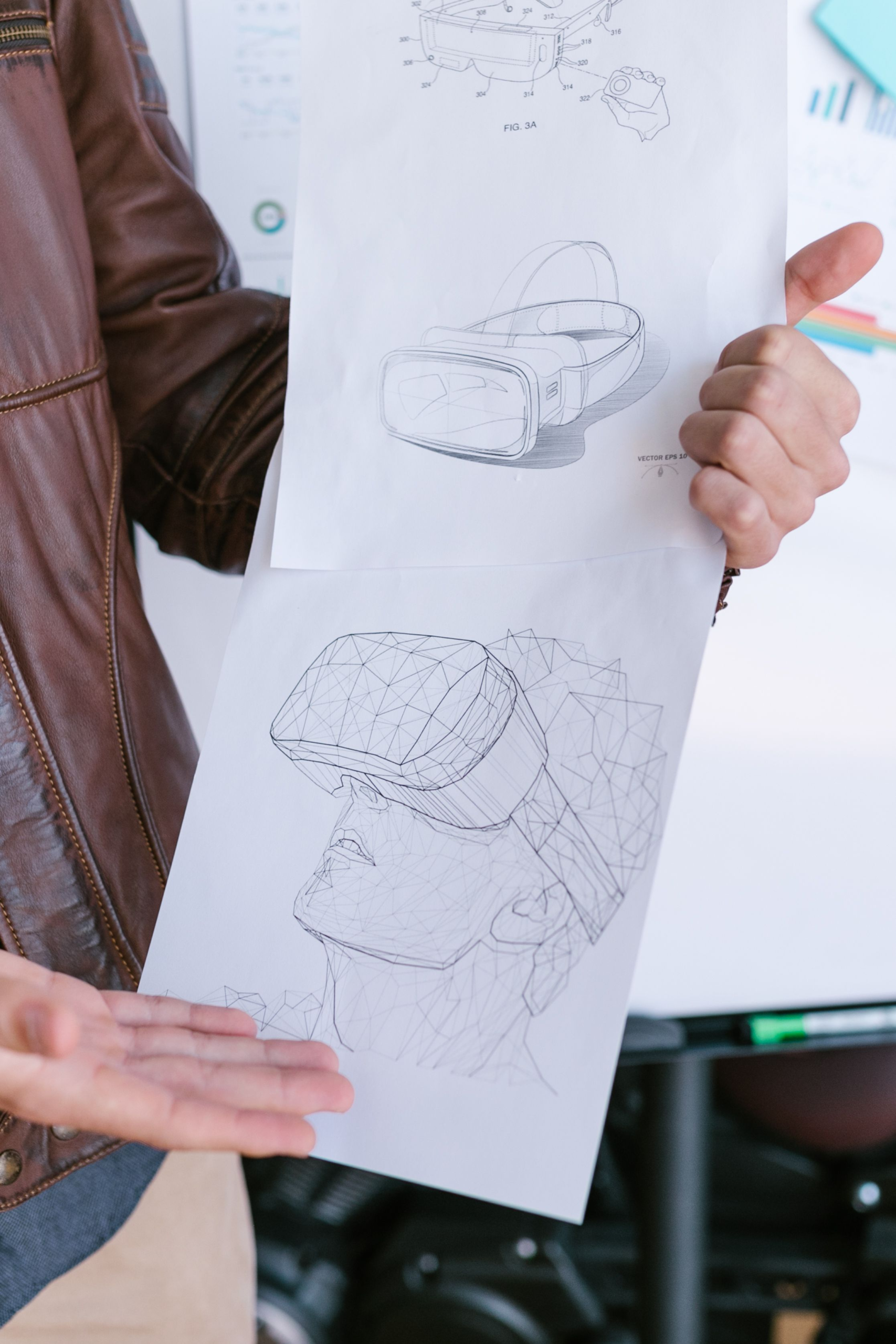
Our methodology is called the Collaborative Design Framework. Every initiative begins with a meaningful Design Challenge – a question curated from signals emerging across communities, research, public institutions, creative practice, industry and lived experience. For every Design Challenge, we convene a Collaborative Design Fellowship: a transdisciplinary team assembled around the perspectives needed to understand the challenge well. Working alongside communities, Fellows cultivate shared understanding before collaboratively designing immersive interventions through XR and Spatial Computing.
A Fellowship concludes when both the community and the Fellows agree that the intervention is ready to stand on its own. Its contribution, however, continues through stewardship. The knowledge, relationships and practices generated through every Fellowship will continue to inform future challenges, strengthening an ever-growing body of collective wisdom.
We believe meaningful interventions are cultivated through collective wisdom. They require a practice of collective sensemaking – bringing together diverse perspectives to cultivate shared understanding before deciding how to act together.
We believe questions are more powerful than assumptions.
We believe communities are co-authors, not beneficiaries.
We believe understanding precedes intervention.
We believe immersive technologies can deepen understanding by making ideas tangible and futures experiential.
And we believe meaningful innovation is measured not only by what is created, but by what continues to grow long after an intervention has been implemented.
A Design Challenge is a meaningful question that invites collaborative exploration of a complex societal challenge.
Design Challenges emerge from signals across communities, research, public institutions, civil society, creative practice, industry and lived experiences. XR Without Borders constantly analyzes these signals and curates questions where immersive technologies may offer a meaningful way to deepen understanding, explore possibilities or create new forms of intervention.
We do not begin by asking, “What can we build?”
We begin by asking, “What deserves to be understood?”
Our practice is grounded in XR and Spatial Computing, so our interventions take immersive forms. However, we do not prescribe the technology before understanding the challenge.
The form of an intervention emerges through the Collaborative Design process.
The question is never simply, “How can we use VR here?” It is, “Given what we now understand together, what immersive intervention could meaningfully respond to this challenge?”
Yes.
Communities, research institutions, public bodies, civil society organizations, foundations, cultural organizations and other partners may bring forward challenge spaces for consideration.
However, proposing or funding a challenge does not predetermine the solution.
Every Design Challenge must retain the integrity of the Collaborative Design process: understanding precedes intervention, communities participate as co-authors, and the form of the eventual immersive intervention emerges through collective inquiry and design.